
The Sea in a Bowl
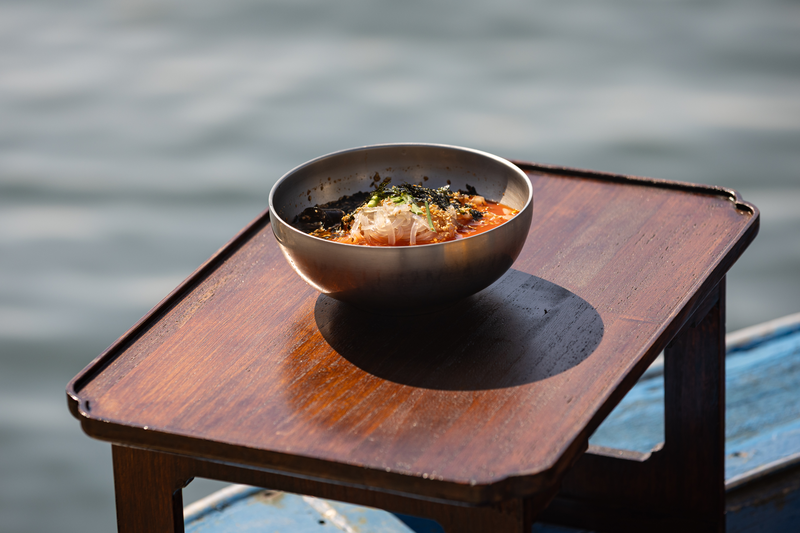
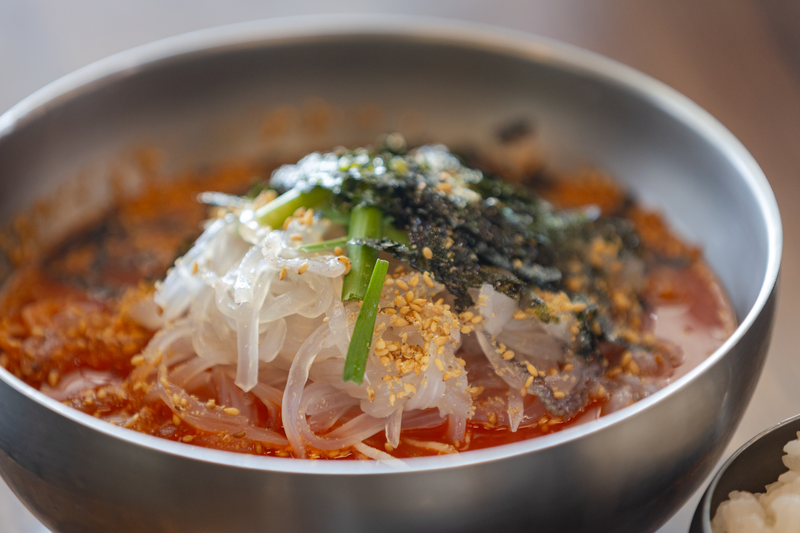
There is a dish that comes to mind when the sweltering summer heat wears you down: a tangy broth with ice floating in it, piled high with fresh raw fish and seafood. The moment you take a spoonful, the scent of the sea and a wave of coolness arrive together. This is mulhoe, cold raw fish soup.
At restaurants near the harbor, where fresh seafood comes in every morning, you can eat mulhoe made from freshly caught fish while looking out over the blue East Sea. The sweet and tangy broth that floods your mouth as the ice melts, the springy, chewy bite of raw fish and seafood, and crisp vegetables meet in one bowl with the full intensity of the sea.
A Meal That Began at Sea

In the fishing villages along the coast, the story goes that fishermen long ago would roughly slice the fish they had just caught, right on the boat, and eat it mixed with jang (traditional fermented pastes and sauces). Mixing raw fish, seasoning, and water together for a quick meal on board is believed to be the forerunner of today’s mulhoe. Over the years, this simple meal of people who worked at sea became a defining part of Gangneung’s food culture.
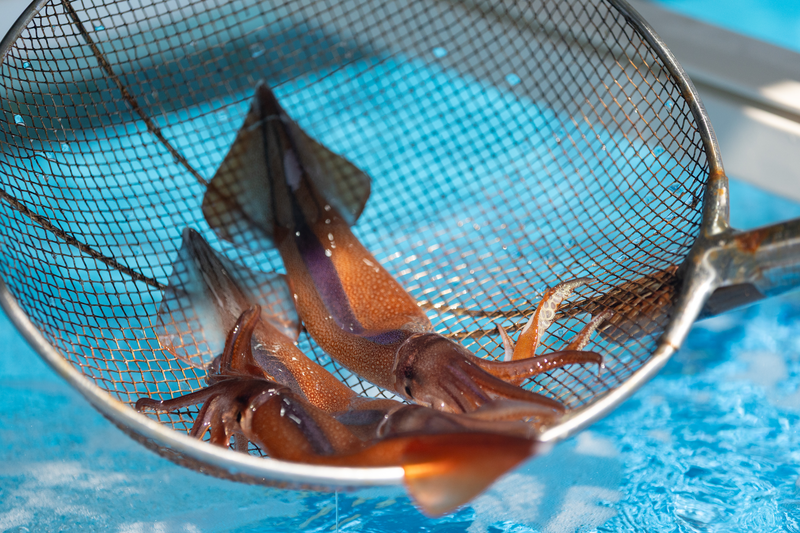
With its long history as a fishing town, Gangneung has landed a wide variety of fish at Jumunjin Port and Sacheon Port, including squid, olive flounder, flatfish, and rockfish, and it developed its mulhoe culture as a delicious way to eat this fresh catch. Squid was once regarded as the classic mulhoe ingredient, but with the decline in squid catches off the east coast in recent years, squid mulhoe has become hard to find.
A Gangneung Mulhoe Spread
Mulhoe is enjoyed in many parts of Korea, but the mulhoe of Gangneung, a UNESCO Creative City of Gastronomy, has something that sets it apart. Pohang mulhoe is typically mixed with gochujang (fermented red chili paste) and served with only a little liquid, while Jeju mulhoe is built on the mellow depth of doenjang (fermented soybean paste). Gangneung mulhoe is sweet and tangy, with the emphasis on a clean, refreshing kick of spice and a finish that leaves no heaviness on the palate.
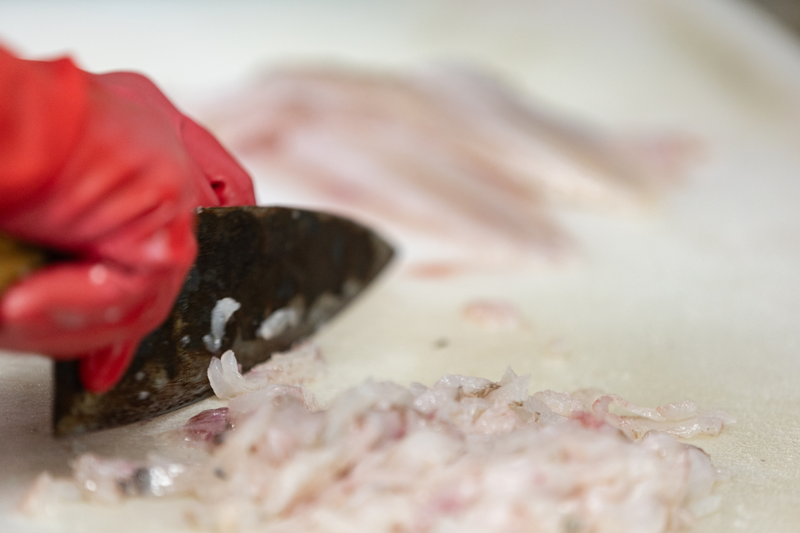
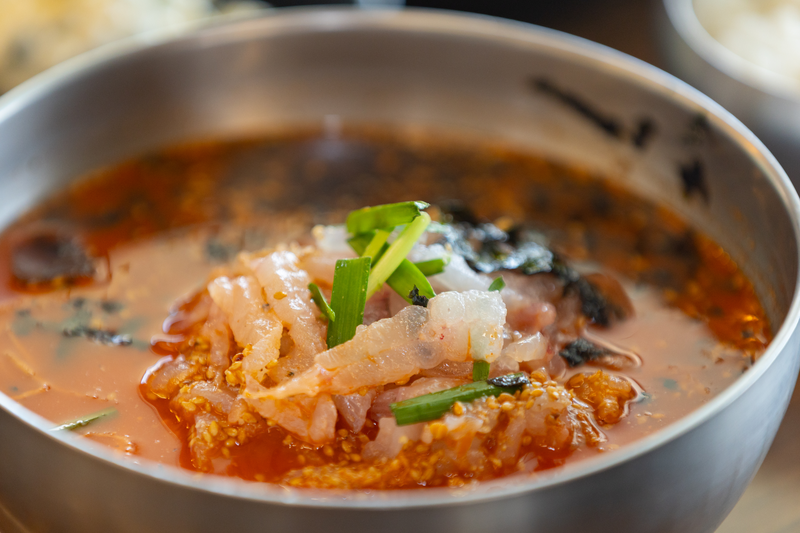
Olive flounder and flatfish are filling the gap left by squid. If olive flounder mulhoe is prized for its chewy texture and subtle sweetness, flatfish mulhoe, with the fish sliced thin and the small bones left in, delivers a nutty savoriness that deepens the more you chew. Mixed mulhoe, piled high with abalone, sea cucumber, sea squirt, and other seafood, overwhelms eyes and palate alike. Each restaurant has its own way of blending a gochujang base with fruit broth, a recipe handed down as a closely guarded secret.
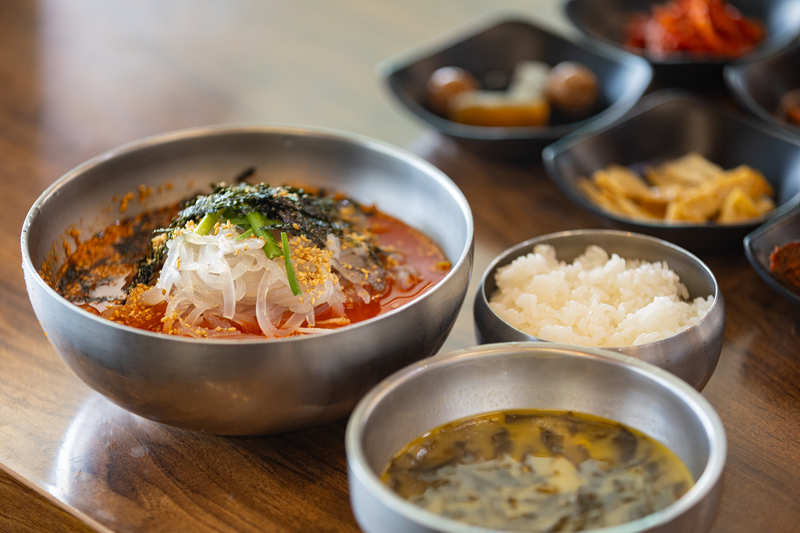
Gangneung mulhoe comes with a companion all its own: rockfish and seaweed soup. Made by simmering the fish bones whole until the broth turns milky and develops a rich flavor, this warm soup gently tempers the cold, intense flavors of the mulhoe, and the two balance each other beautifully. Add thin wheat noodles to the broth first and eat them with the fresh raw fish, then finish by adding rice to the broth for a hearty end to the meal.
Sacheon Mulhoe Village
The place to experience the flavor and tradition of Gangneung mulhoe is Sacheon Mulhoe Village, where mulhoe restaurants cluster around Sacheon Port, a small harbor just below Jumunjin in the north of Gangneung. The village has also been designated by Gangneung City as a specialty village for local cuisine.
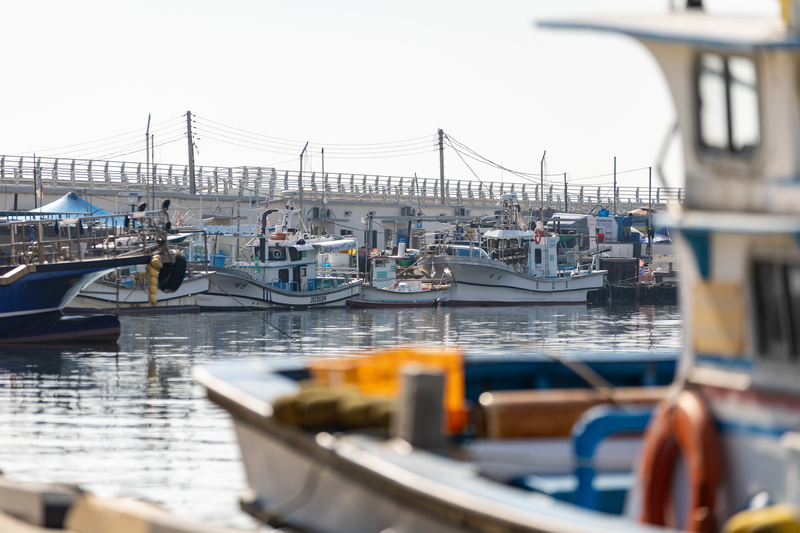
At Sacheon Port, boats come and go from before dawn each day, unloading freshly caught seafood. Some mulhoe restaurant owners even go out to sea themselves to catch the fish they will serve that day. Because the restaurants buy their seafood directly at the morning auction on the dock, the ingredients are always fresh. The fish on offer can change with the kind and quantity of seafood that comes into port that day. Squid has become so scarce that the price of squid mulhoe is set each day according to the catch.
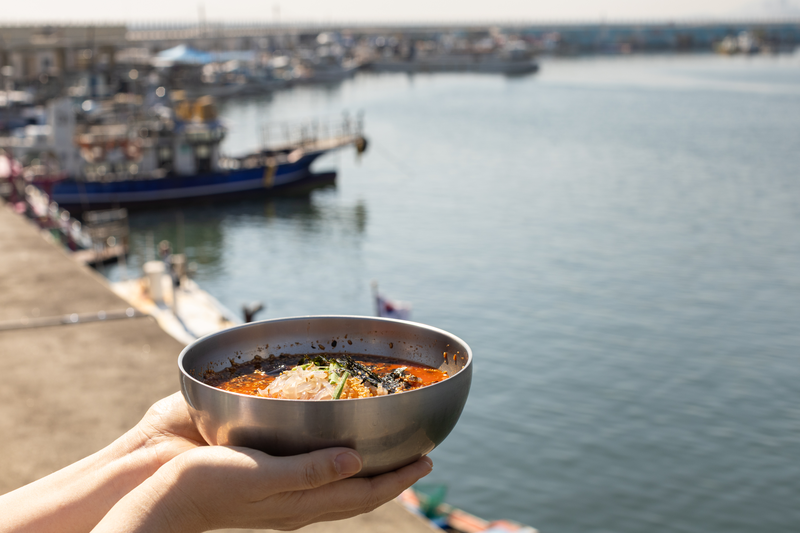
That is why mulhoe is not just the dish that defines summer in Gangneung: to eat a bowl of mulhoe is, in the end, to taste the sea exactly as it was that day.

