
Three Ways to Enjoy Makguksu
Mul Makguksu vs. Bibim Makguksu vs. Deulgireum Makguksu
Makguksu (buckwheat noodles) is the signature local dish of Gangwon State. Its main ingredient, buckwheat, grows well even in poor soil, so farmers and slash-and-burn cultivators in Gangwon’s mountainous areas grew it as a staple food. Noodles made from buckwheat dough had little elasticity and tended to break apart, and once boiled they quickly swelled, so they had to be eaten right away. The “mak” in makguksu is said to mean “right away” or “just now,” though another reading is that it refers to noodles made roughly, without much fuss. There are other theories as well, but one thing is certain: nobody stands on ceremony when eating makguksu. To get the full flavor, you have to slurp it down before the noodles swell, which is also why it has long been considered a humble, everyday food.
In the past, makguksu was eaten in kimchi liquid or dongchimi (radish water kimchi) brine; as toppings and seasonings were added, it grew into a richer dish. There is surely more than one way to enjoy a bowl of makguksu. Here are three delicious ways to eat it.
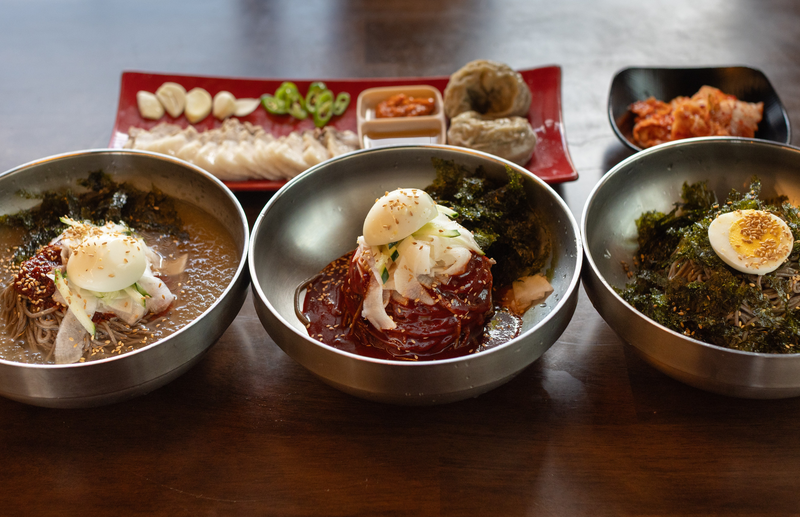
Cool, Clean, and Bracingly Refreshing
Mul Makguksu
(Buckwheat Noodles in Chilled Broth)

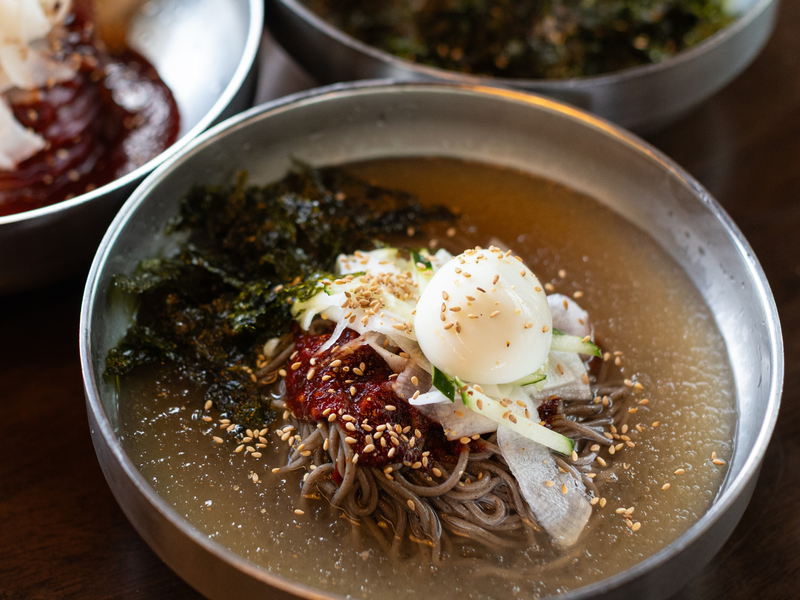
The most basic form of makguksu is mul makguksu: buckwheat noodles in a chilled broth with slivers of ice floating on top, served with toppings such as pickled radish, cucumber, and a boiled egg. The broth is usually a clear meat broth or dongchimi brine, though some restaurants use a vegetable or fruit broth.
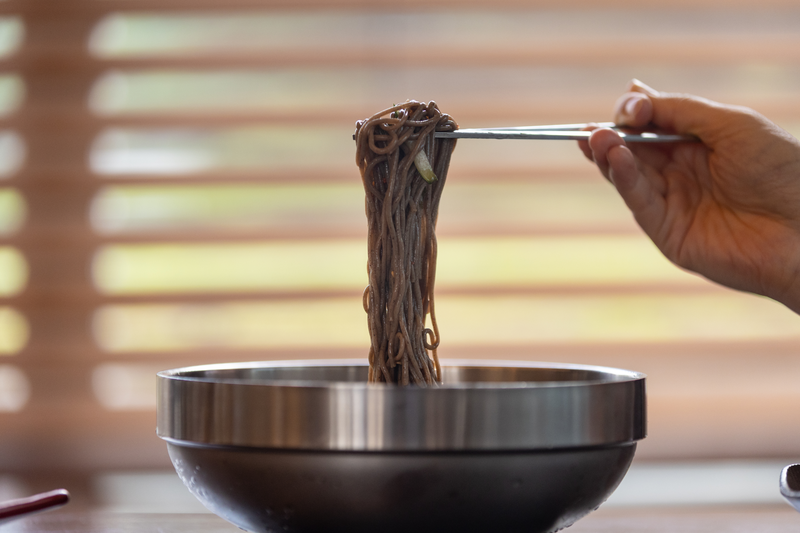
Before digging in, taste the broth first; that tells you how much vinegar, sugar, and mustard sauce to add. Once the broth suits you, slurp up the chilled, springy buckwheat noodles in one breath. The cool broth and the nutty taste of buckwheat combine to leave you feeling light and refreshed, which is why mul makguksu is just the thing in summer.
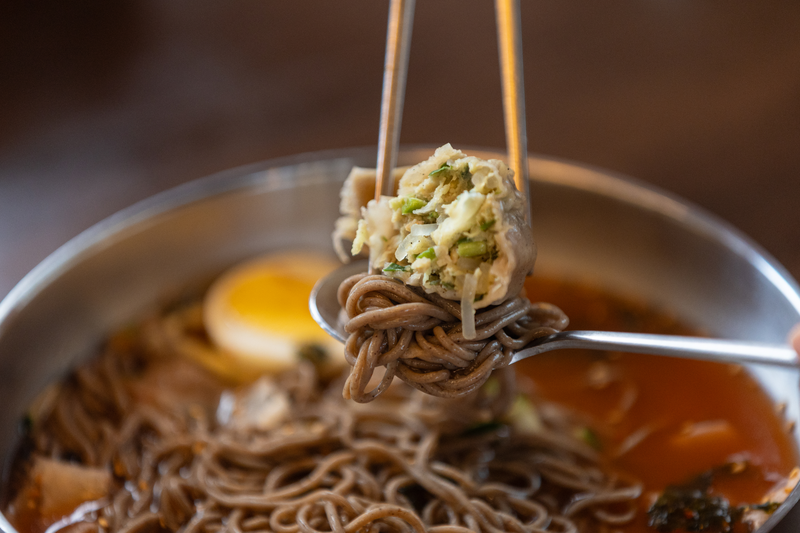
Cold food calls for something soft and warm alongside it to take the chill off, and mul makguksu goes well with steamed dumplings (mandu). Cold and warm, clean and rich: the contrasts do not clash but balance each other, for a deeply satisfying combination.
The Taste of Sweet and Spicy Sauce
Bibim Makguksu
(Buckwheat Noodles in a Sweet-Spicy Sauce)
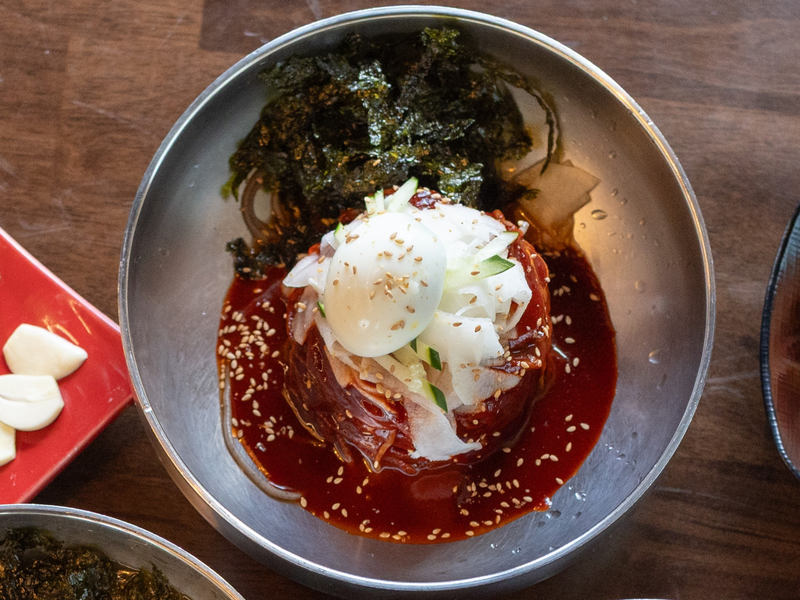
Bibim makguksu, tossed in a sweet and spicy sauce with just a splash of broth, is a good choice for those who are not fond of soupy dishes or who want to enjoy mul and bibim makguksu at the same time. The toppings are much the same as for mul makguksu, but some recipes add spicy seasoned flatfish or pollock for a firm, chewy bite. There are also newer styles topped with octopus, bulgogi (marinated grilled meat), and more.
When eating bibim makguksu, first add a little broth to loosen the noodles, taking care not to thin the sauce too much. Mix well so that every strand is coated, and add vinegar, sugar, and mustard sauce to taste. Well-mixed makguksu makes an appetizing sound as you toss it. Take a big bite of the sauce-coated noodles: the rich, full-bodied sauce comes first, followed by the unmistakable nutty taste of buckwheat, and your mouth fills with a swirl of aromas and flavors. If mul makguksu is clean and understated, bibim makguksu is bold and flamboyant. Add broth partway through and you can enjoy it as refreshing mul makguksu, too.
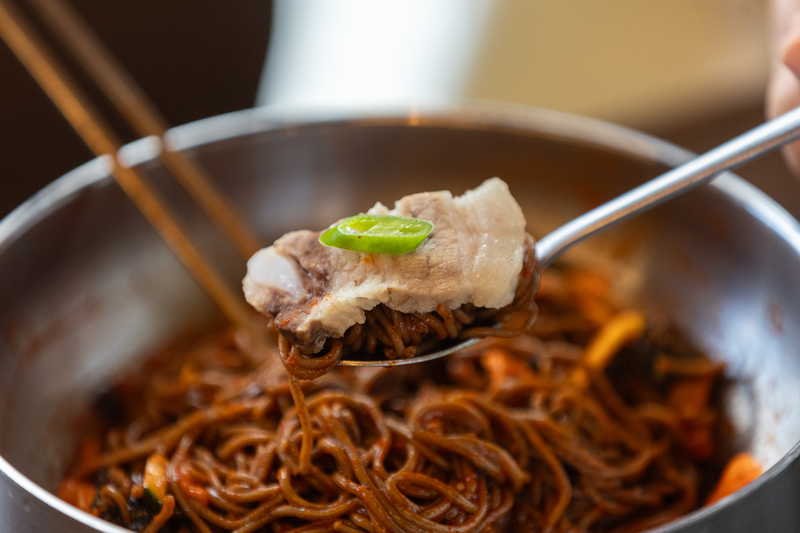
To take the edge off the heat, suyuk (tender slices of boiled meat), mild yet rich, is the natural partner. As the saying goes, meat is best when wrapped in something, and a slice of suyuk rolled up in bibim makguksu and eaten in one bite is very hard to resist.
The Pure Flavor of Buckwheat
Deulgireum Makguksu
(Buckwheat Noodles with Perilla Oil)
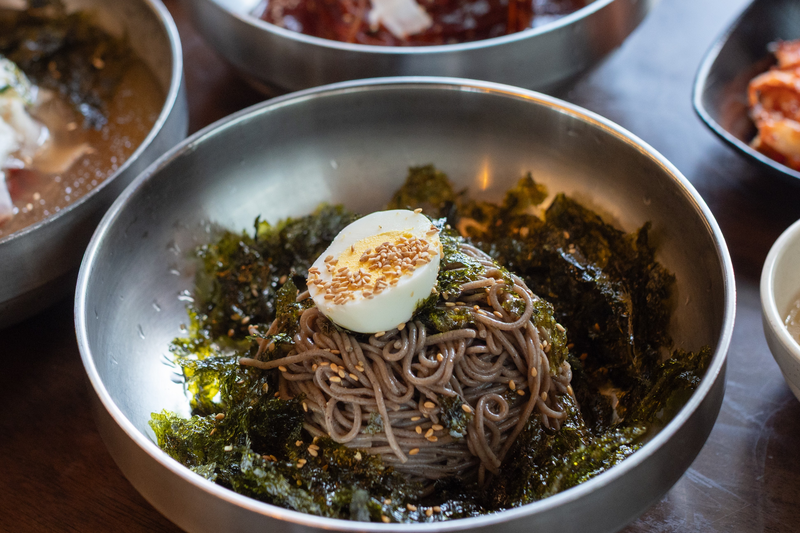
Deulgireum makguksu, buckwheat noodles tossed with perilla oil, soy sauce, seaweed flakes, and sesame seeds, lets the pure flavor of buckwheat come through. Ironically, its clean, wholesome flavor, free of heavy seasoning, has made it the “hot” new favorite. As interest in healthy eating grows, Korean perilla oil is said to be gaining attention abroad as a health food, and deulgireum makguksu seems to be making a growing name for itself as a K-food.
Deulgireum makguksu is eaten for its clean, nutty flavor rather than for bold seasoning. Glossy with perilla oil, the noodles taste mild at first, but the more you chew, the more their nutty depth spreads through your mouth. It is a good choice for older diners and children who find spicy food hard to take.
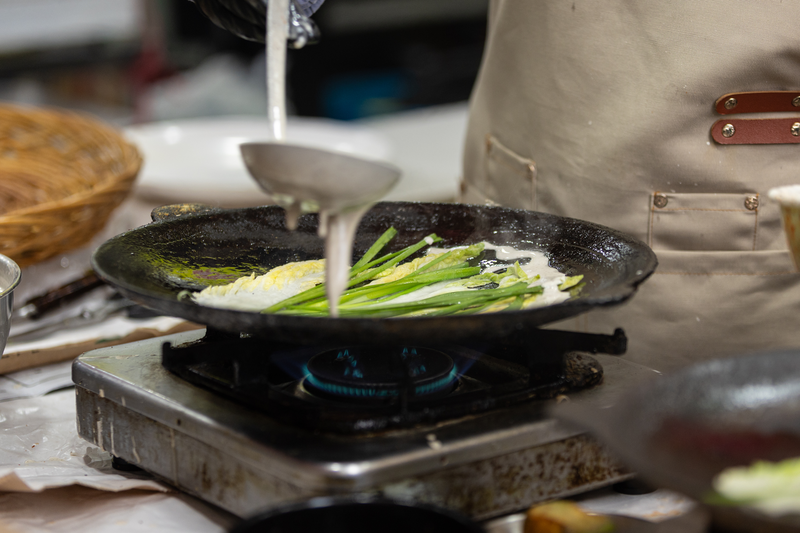
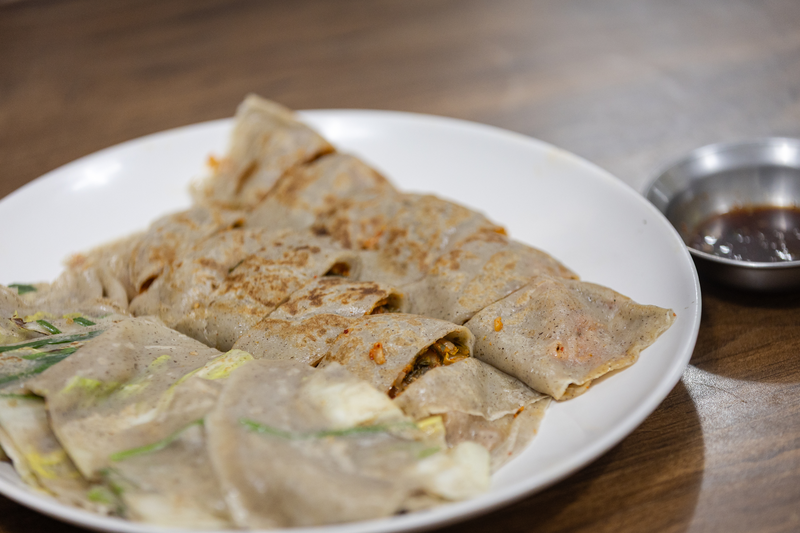
Why not pair deulgireum makguksu with memiljeon, which has a similarly mild character? Memiljeon is a light dish made by laying long strips of sour kimchi and green onion on the griddle, pouring a thin buckwheat batter over them, and cooking it into a thin pancake. The clean, tangy kimchi that follows the mildness of the memiljeon cuts through the richness of the perilla oil.

